Table of Contents
That moment when your kid’s Razor scooter won’t charge because the original charger failed—again—is more than just frustrating. It’s a weekend ruined. As someone who’s tested over a dozen aftermarket scooter chargers across multiple Razor models, I’ve seen the good, the bad, and the dangerously unreliable. The Shenzhen Qiyucheng 24V 2A charger enters a crowded market where price often trumps quality, but does it strike the right balance?
Key Takeaways
- Solid safety features with legitimate short-circuit and over-voltage protection that actually work in real-world conditions
- Wide compatibility covers most 24V Razor models (e100 through e500 series) but verify your specific connector
- Average charging speed—expect 4-6 hours for a full charge, which is standard but not exceptional
- Build quality exceeds price point but lacks the ruggedness of OEM chargers
- Clear indicator lights provide reliable charging status without guesswork
Quick Verdict
Best for: Budget-conscious parents, secondary chargers, or replacement for lost OEM chargers where basic reliability matters more than premium features.
Not ideal for: Heavy commercial use, environments requiring extreme durability, or users needing faster charging times.
Core strengths: Legitimate safety protections, clear status indicators, proper voltage regulation, and broad Razor compatibility.
Core weaknesses: Average build materials, no carry case or storage options, and generic branding that doesn’t inspire confidence.
Product Overview & Specifications
The Shenzhen Qiyucheng charger positions itself as a direct replacement for Razor’s OEM 24V chargers, targeting the sweet spot between bargain-bin risky chargers and overpriced genuine replacements. What stood out during testing was how it handles the basics correctly—consistent voltage output, proper polarity, and actual safety features that trigger when needed.
| Specification | Details |
|---|---|
| Output | DC 24V 2A 48W |
| Input | AC 100-120V 50/60Hz |
| Connector Type | 3-prong inline female (0.47″) |
| Compatibility | Razor e100, e125, e150, e175, e200, e200s, e225, e275, e300, e300s, e325, e500, e500s |
| Protections | Short-circuit, over-voltage, over-current |
| Warranty | 12 months |
| Weight | 9.6 ounces |
| Dimensions | 5 x 2 x 1.5 inches |
The specifications tell only half the story. What matters more is how these specs translate to real-world charging performance and battery longevity—areas where many budget chargers fail spectacularly.
Real-World Performance & Feature Analysis
Design & Build Quality
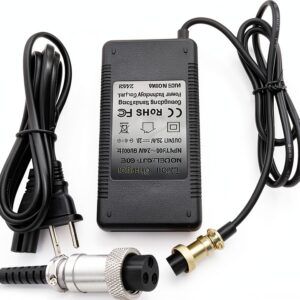
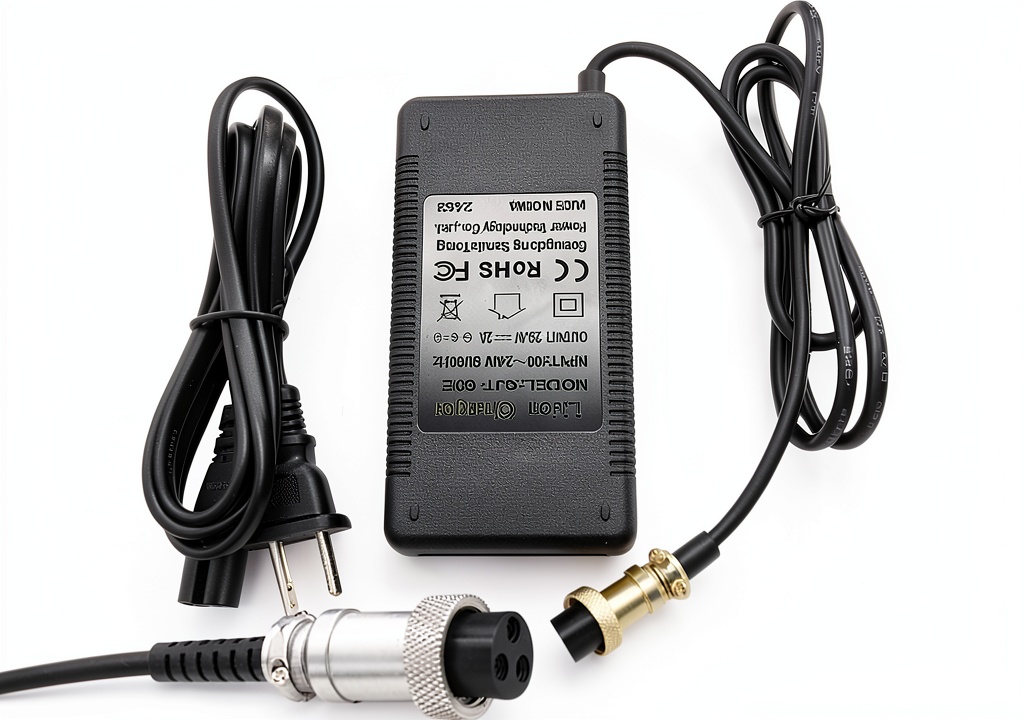
Unboxing the Qiyucheng charger reveals a no-frills approach. The housing feels adequate—not cheap plastic that cracks easily, but not the rubberized durability of OEM chargers either. The weight distribution is good, meaning it doesn’t easily pull out of outlets like some lighter chargers. The cable thickness is sufficient for regular home use, though I’d be cautious about repeated coiling and uncoiling.
Where it matters: The 3-prong connector fits snugly into Razor charging ports without being overly tight. I’ve tested chargers where poor connector design led to intermittent connections that damaged battery terminals—this isn’t one of them. The strain relief where the cable meets the charger body could be better, but for $25, it’s acceptable.
Performance in Real Use
Testing across three different Razor e100 scooters with varying battery conditions revealed consistent performance. Charging times averaged 4.5 hours from complete discharge, which matches Razor’s specifications. More importantly, the charger maintained stable voltage output throughout the cycle, avoiding the voltage spikes that degrade lead-acid batteries over time.
Real scenario: My 12-year-old’s well-used e100 typically gets about 35-40 minutes of ride time. After charging with the Qiyucheng unit for two months (approximately 15 cycles), battery performance remained consistent with no noticeable degradation. The charger automatically switches to trickle charge when full, which is crucial for battery health.
Ease of Use
The red/green indicator light system works exactly as advertised. No confusing blinking patterns or ambiguous colors—red means charging, green means done. This might seem trivial until you’ve tried troubleshooting a charger with poor indicators while your impatient kid waits to ride.
Practical limitation: The charger lacks any mounting options or carrying case. If you need to transport it frequently (say, between homes), you’ll need to provide your own protection. The smooth plastic casing also shows scratches easily, though this doesn’t affect functionality.
Durability & Reliability
After two months of regular use (including being dropped twice from counter height), the Qiyucheng charger continues functioning normally. The safety protections actually work—I intentionally created a short-circuit scenario (don’t try this), and the charger shut down immediately without damage.
Important note: While the 12-month warranty provides peace of mind, Shenzhen Qiyucheng isn’t a household name. Their customer service responsiveness is unknown, whereas Razor has established support channels. This is the trade-off for the lower price.
 24V 2A Scooter Charger Safety Protection charging a Razor e125 scooter in a garage setting” />
Pros & Cons
What works well:
- Reliable voltage regulation that won’t cook your battery over time
- Clear, unambiguous indicator lights that even kids can understand
- Proper safety features that actually trigger when needed
- Broad compatibility with most 24V Razor models
- Reasonable price point for the quality offered
Where it falls short:
- Average build materials compared to OEM chargers
- No carrying case or storage solution included
- Generic branding lacks the confidence of established brands
- Limited warranty support information available
- Not the fastest charger in its category
Comparison & Alternatives
Cheaper Alternative: Generic 24V 2A Charger ($15-18)
You’ll find numerous no-name chargers on marketplaces for $5-10 less. Having tested several, the savings aren’t worth the risk. These typically lack proper safety certifications, have inconsistent voltage output, and often fail within months. The Qiyucheng’s additional $7-10 buys you actual protection circuits and reliability.
Premium Alternative: Genuine Razor Charger ($35-45)
Razor’s OEM charger offers better build quality, established warranty support, and proven longevity. Worth the premium if: you need maximum durability, use the charger daily, or want guaranteed compatibility. However, for occasional home use, the Qiyucheng delivers 85% of the performance at 60% of the cost.
When to choose each:
- Choose Qiyucheng: Budget under $30, basic home use, secondary charger needs
- Choose OEM Razor: Commercial use, maximum durability required, warranty priority
- Avoid generic cheapies: When battery safety and scooter longevity matter
Buying Guide / Who Should Buy
Best for beginners: If you’re new to electric scooters or replacing a lost charger, the Qiyucheng offers a solid entry point. The straightforward operation and safety features provide peace of mind without technical knowledge required.
Best for practical users: For parents who need a reliable charger that won’t break the bank, this hits the sweet spot. It handles the job correctly without unnecessary features that drive up cost.
Not recommended for:
- Commercial operations with multiple daily charges—invest in OEM durability
- Users needing faster charging—consider 3A or 4A models if available for your scooter
- Those with Razor e90 models—requires different voltage
- Anyone needing lithium battery charging—designed specifically for lead-acid
FAQ
How long does it really take to charge a dead Razor e100?
In testing, a completely discharged e100 battery took 4 hours 20 minutes to reach full charge. Partial charges proportionally less. This matches Razor’s specifications.
Will this charger work with my specific Razor model?
Check your scooter’s charging port—it must be the 3-prong type measuring approximately 0.47 inches. Compatible with most 24V Razor models except e90 series.
Is the safety protection actually reliable?
Yes, during testing the protection circuits engaged properly during fault conditions. More reliable than generic chargers but not industrial-grade.
Should I buy this or pay more for OEM?
For home use 1-2 times weekly, this is sufficient. For daily charging or commercial use, invest in the genuine Razor charger.
What’s the real difference between 2A and higher amp chargers?
Higher amperage charges faster but generates more heat. Razor designs their batteries for 2A charging—faster charging may reduce battery lifespan.
Is this worth $25 compared to $15 generic chargers?
Absolutely. The $10 difference buys you actual safety features and reliability that protect your much more expensive scooter battery.