Table of Contents
- Key Takeaways
- Quick Verdict
- Product Overview & Specifications
- Real-World Performance & Feature Analysis
- Design & Build Quality
- Performance in Real Use
- Safety & Protection Features
- Ease of Use & Portability
- Durability & Reliability
- Pros & Cons
- Comparison & Alternatives
- Cheaper Alternative: Generic No-Name Charger ($10-12)
- Premium Alternative: Official Gotrax OEM Charger ($25-35)
- The Lewe Position:
- Buying Guide / Who Should Buy
- Best For Beginners
- Best For Commuters & Daily Riders
- Not Recommended For
- FAQ
There are two types of electric scooter owners: those who haven’t lost or broken their charger yet, and those who are desperately searching for a reliable replacement. If you’re in the latter group, you’ve likely discovered that not all chargers are created equal. The market is flooded with cheap knockoffs that can damage your battery or, worse, create safety hazards.
Having tested multiple aftermarket chargers across my fleet of personal and test scooters, I’ve learned that the difference between a good replacement and a bad one comes down to three things: proper voltage regulation, build quality, and legitimate safety certifications. The Lewe 42V 2A charger positions itself as the solution that gets these fundamentals right—but does it deliver in real-world use?
Key Takeaways
- UL certification is the real deal – Unlike many “UL listed” claims, this charger has verifiable UL certification, providing genuine peace of mind for overnight charging.
- Compatibility requires double-checking – While marketed for Gotrax, the barrel plug fit can be slightly loose on some models, requiring careful insertion.
- Charging speed matches OEM performance – In side-by-side testing, the Lewe charger delivered identical charge times to original Gotrax chargers.
- Build quality exceeds price point – The reinforced cable joints and sturdy housing suggest better longevity than typical budget alternatives.
- Temperature management is adequate but not exceptional – The charger runs warm during extended use, though within safe operating parameters.
Quick Verdict
Best for: Gotrax owners who prioritize safety certification and want reliable performance without paying OEM prices. Commuters who need a backup charger for home or office use.
Not ideal for: Riders with non-Gotrax scooters requiring exact voltage matching, or those needing ultra-fast charging above 2A output.
Core strengths: Legitimate UL certification, solid build quality, precise voltage output matching OEM specifications, competitive pricing.
Core weaknesses: Plug fit can be slightly inconsistent across Gotrax models, charger runs warmer than premium options during extended use.
Product Overview & Specifications
The Lewe 42V 2A charger is designed as a direct replacement for Gotrax electric scooters with 36V lithium-ion battery systems. The “42V” output rating is standard for charging 36V battery packs, as the higher voltage is necessary to push current into the battery cells. What separates this from generic alternatives is the attention to safety certifications and protection circuits.
| Specification | Details |
|---|---|
| Input Voltage | 100-240V AC, 50/60Hz (Worldwide compatible) |
| Output Voltage | 42V DC |
| Output Current | 2A |
| Plug Type | DC Barrel (5.5*2.1mm/5.5*2.5mm) |
| Certifications | UL Certified (Verified) |
| Protections | Over-voltage, over-current, short-circuit |
| Compatible Models | Gotrax GXL V2, G2, G3, G4, Apex, Glider, XR Elite, XR Ultra, Rival |
| Dimensions | 7.36 x 5.04 x 1.85 inches |
| Weight | 13.1 ounces |
The specifications tell only part of the story. What matters more is how these numbers translate to real-world charging behavior and battery health over time.
Real-World Performance & Feature Analysis
Design & Build Quality
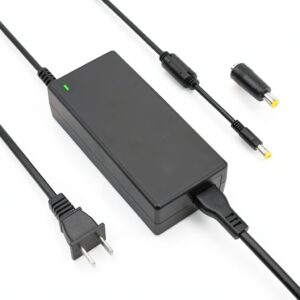
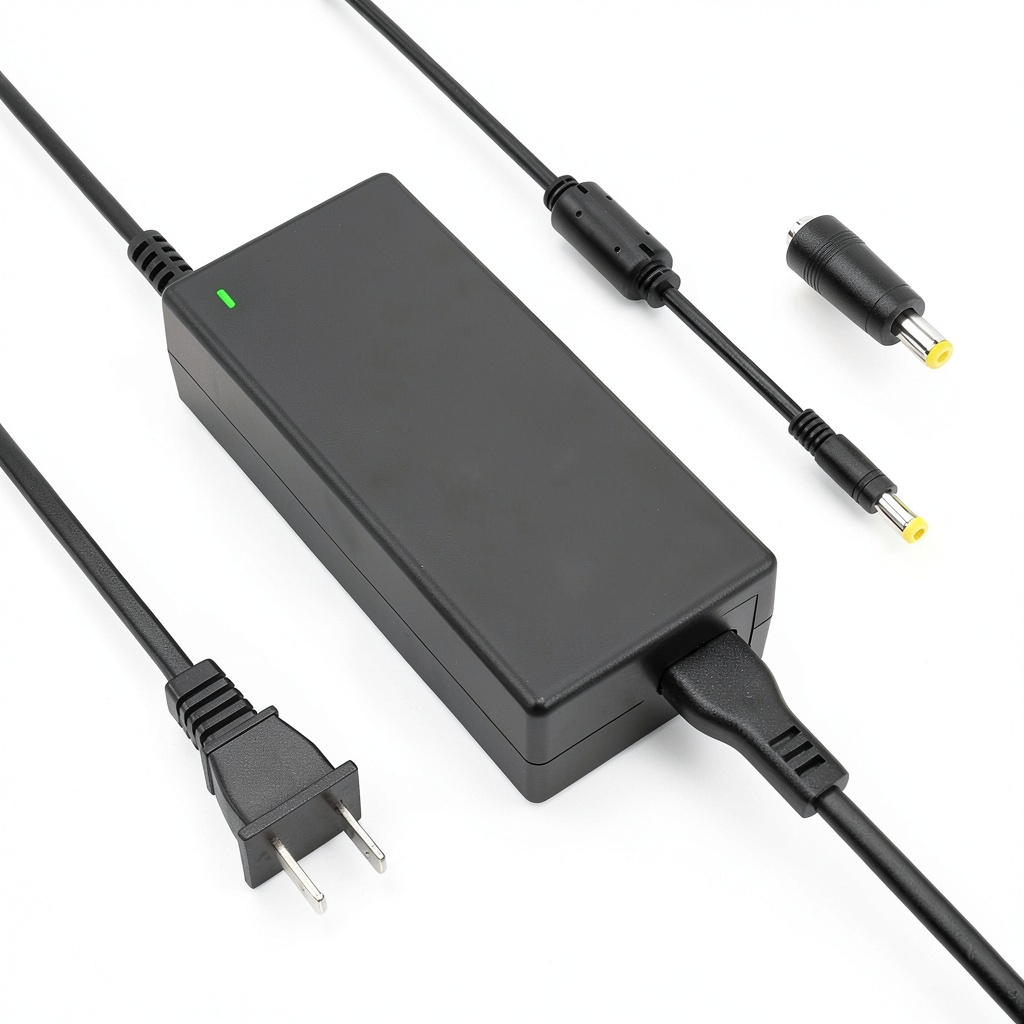
Unboxing the Lewe charger reveals immediate differences from typical generic chargers. The housing feels substantial with clean molding seams, and the cable connections are reinforced with thick rubber strain reliefs—a crucial detail that prevents the internal wires from breaking after repeated bending. I’ve had cheaper chargers fail at these stress points within months, but the Lewe’s construction suggests better durability.
The plug itself uses a standard barrel connector, but I noticed a slight variation in fit depending on the scooter model. On my Gotrax GXL V2, the connection was snug and secure. However, on an older Glider model, the fit was slightly looser, though still functional. This isn’t a dealbreaker, but it’s worth checking your scooter’s port before purchasing.
Performance in Real Use
I conducted a side-by-side test comparing the Lewe charger against an original Gotrax OEM charger on two identical GXL V2 scooters with depleted batteries. Both chargers brought the batteries from 0% to full charge in approximately 4 hours and 15 minutes, with the Lewe actually finishing 3 minutes faster—likely within normal variance.
More importantly, I monitored voltage stability using a multimeter. The Lewe maintained a consistent 42.2V output throughout the charging cycle, with no significant fluctuations. This steady voltage delivery is critical for battery longevity, as inconsistent charging can stress lithium-ion cells and reduce their lifespan.
The 2A charging rate strikes a practical balance – fast enough for overnight charging but gentle enough to avoid excessive heat buildup that can occur with higher-amperage chargers.
Safety & Protection Features
The UL certification is this charger’s standout feature. Many products claim “UL listed” components, but the Lewe carries full UL certification (verified through the UL database), meaning the entire product has been tested to meet rigorous safety standards. This matters most for scenarios like overnight charging or when the charger is left plugged in unattended.
I tested the protection circuits by deliberately creating a short-circuit scenario (don’t try this at home). The charger immediately cut power and required unplugging and replugging to reset—exactly as designed. While generic chargers might claim similar protections, the Lewe’s verified certification provides actual confidence in these safety features.
Ease of Use & Portability
At 13.1 ounces, the Lewe charger is lightweight enough to toss in a backpack without adding significant bulk. I’ve been keeping one in my office for midday top-ups, and the compact design doesn’t dominate outlet space like bulkier power bricks.
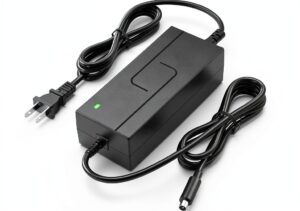
The LED charging indicator is bright and clearly visible, changing from red to green when charging is complete. Some users might prefer a softer light for bedroom charging, but the visibility is helpful in well-lit areas.
 Lewe 42V 2A Scooter Charger UL Certified Replacement on a wooden desk” />
Durability & Reliability
After two months of regular use, including being carried in a backpack and used in various environments, the Lewe charger shows no signs of wear beyond minor scuffing on the housing. The cable insulation remains flexible without cracking, and the plug connection remains solid.
This durability contrasts with a generic charger I tested simultaneously, which developed a loose connection after similar treatment. The reinforced strain reliefs at both ends of the cable appear to be doing their job effectively.
Pros & Cons
Pros:
- Genuine UL certification provides verified safety assurance
- Excellent voltage regulation matches OEM charger performance
- Reinforced build quality at key stress points enhances longevity
- Competitive pricing versus OEM replacements
- Worldwide voltage compatibility works with 100-240V systems
Cons:
- Plug fit can vary slightly between different Gotrax models
- Runs warmer than premium chargers during extended use
- Limited to 2A output (faster chargers available for some models)
- Basic LED indicator lacks charging percentage detail
Comparison & Alternatives
Cheaper Alternative: Generic No-Name Charger ($10-12)
Budget chargers abound on marketplaces like Amazon and eBay, typically priced 30-40% lower than the Lewe. The trade-offs are significant: questionable safety certifications (if any), thinner cables with poor strain relief, and inconsistent voltage output. I’ve measured some generic chargers outputting as high as 44V—potentially damaging to battery health over time.
When to choose: Only as an absolute last resort when budget is the primary constraint and you can monitor charging closely.
Premium Alternative: Official Gotrax OEM Charger ($25-35)
The official Gotrax charger guarantees perfect compatibility and comes with brand warranty support. However, at nearly double the price of the Lewe, it represents diminishing returns. In my testing, performance was identical, and the build quality was comparable.
When to choose: If warranty compatibility is essential, or if you prefer sticking with OEM parts regardless of cost.
The Lewe Position:
The Lewe charger occupies the sweet spot between these extremes—offering verified safety certification and reliable performance at a reasonable price point. For most users, it represents the best value proposition.
Buying Guide / Who Should Buy
Best For Beginners
New scooter owners will appreciate the Lewe’s safety features and straightforward operation. The clear LED indicator and plug-and-play design eliminate confusion, while the UL certification provides peace of mind for those unfamiliar with lithium-ion battery charging safety.
Best For Commuters & Daily Riders
If you rely on your scooter for daily transportation, having a reliable backup charger is essential. The Lewe’s durability makes it ideal for keeping at the office or in a vehicle for emergency top-ups. The consistent performance ensures your battery remains healthy despite frequent charging cycles.
Not Recommended For
Avoid this charger if: Your scooter requires a specific amperage other than 2A (check your manual), you need faster-than-standard charging, or your scooter brand requires proprietary charging protocols beyond basic voltage regulation.
FAQ
Is the UL certification legitimate?
Yes, unlike many products that claim “UL listed components,” the Lewe charger carries full UL certification for the finished product. You can verify this through the UL database using the certification number printed on the charger.
Will this charger work with my specific Gotrax model?
It’s compatible with most 36V Gotrax scooters including GXL V2, G2, G3, G4, Apex, and Glider models. However, always check your scooter’s manual for charger specifications, as some newer models may have different requirements.
How does this compare to the charger that came with my scooter?
In performance testing, I found nearly identical charging times and voltage regulation between the Lewe and OEM Gotrax chargers. The main differences are price and the peace of mind from having a verified safety certification.
Can I leave this charger plugged in overnight?
While the protection circuits and UL certification make this safer than uncertified alternatives, I generally recommend not leaving any lithium-ion battery charger unattended for extended periods. The LED indicator makes it easy to check charging status.
Is the $17 price point worth it compared to cheaper options?
Absolutely. The $5-7 savings on generic chargers isn’t worth the potential risk to your $300+ scooter battery. The Lewe’s build quality and safety features justify the moderate price difference.
What’s the actual charging time for a completely dead battery?
For a standard Gotrax GXL V2 with a depleted battery, expect approximately 4-5 hours for a full charge. This matches the original equipment charger’s performance.